
Let’s Talk: Lofi Linens
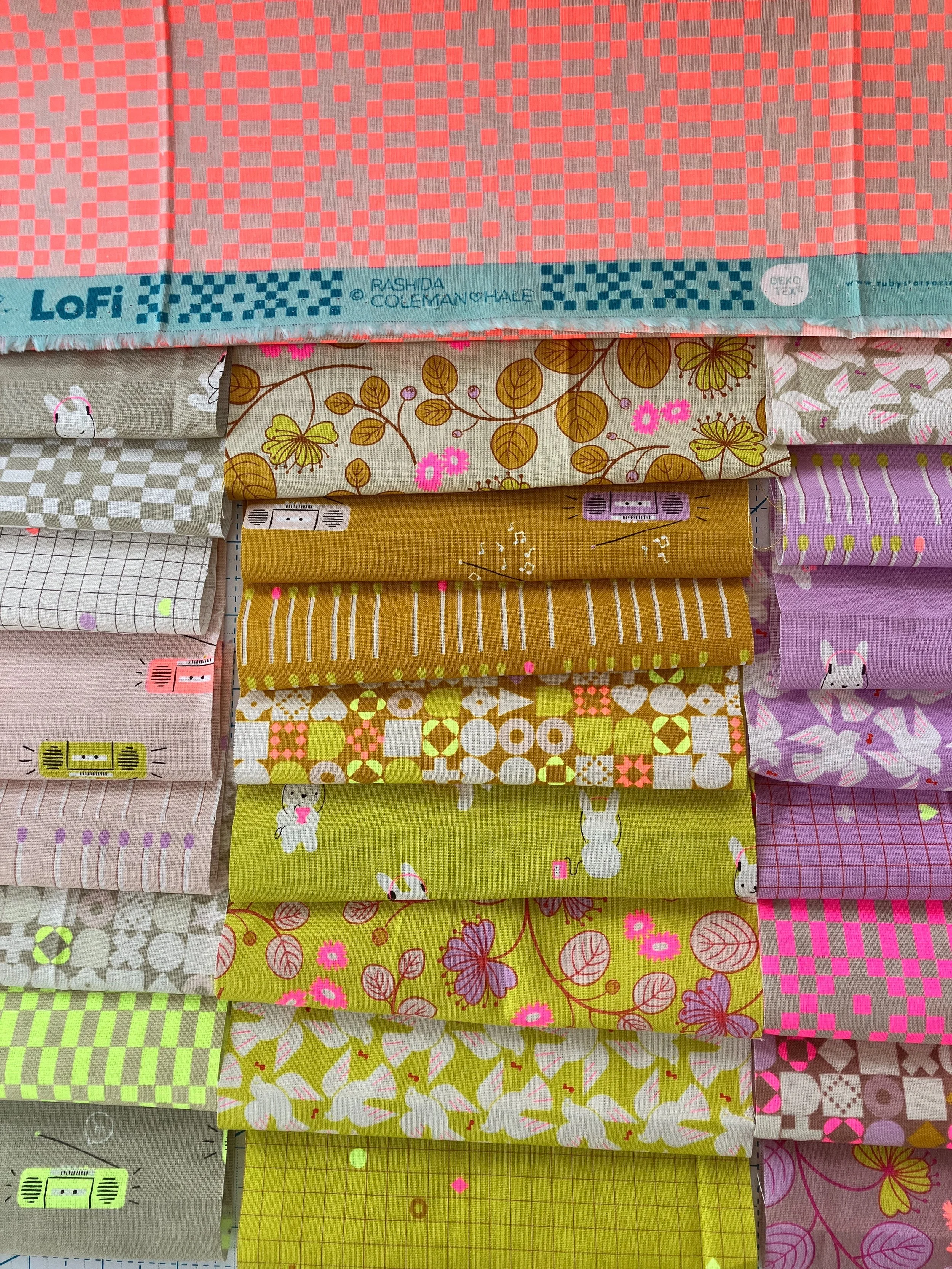
For the past few weeks, I’ve been working with the new linen blend from Ruby Star Society.
Lofi Linens is designed by Rashida Coleman-Hale and is manufactured on a fabric base that is 15% linen and 85% cotton.
Some important things to note about this fabric:
Care Instructions:
This fabric can be machine washed but must be on a cool wash (no hot water washes).
Do NOT put in the dryer. Lofi Linens is marked as being “Line Dry in the shade”.
Iron on medium heat.
For me, these care settings didn’t really change the way I operate in the studio. I’ve often used linen, canvas and other substrates in my work so my iron never goes above medium. As a pattern designer, I don’t tumble dry most of my quilts because the dryer crinkle can really effect photography. But I know a lot of people who love the crinkle a quilt can get in the dryer so it’s good to be aware that any projects using this fabric base aren’t going to be able to achieve that.
Shrink Testing
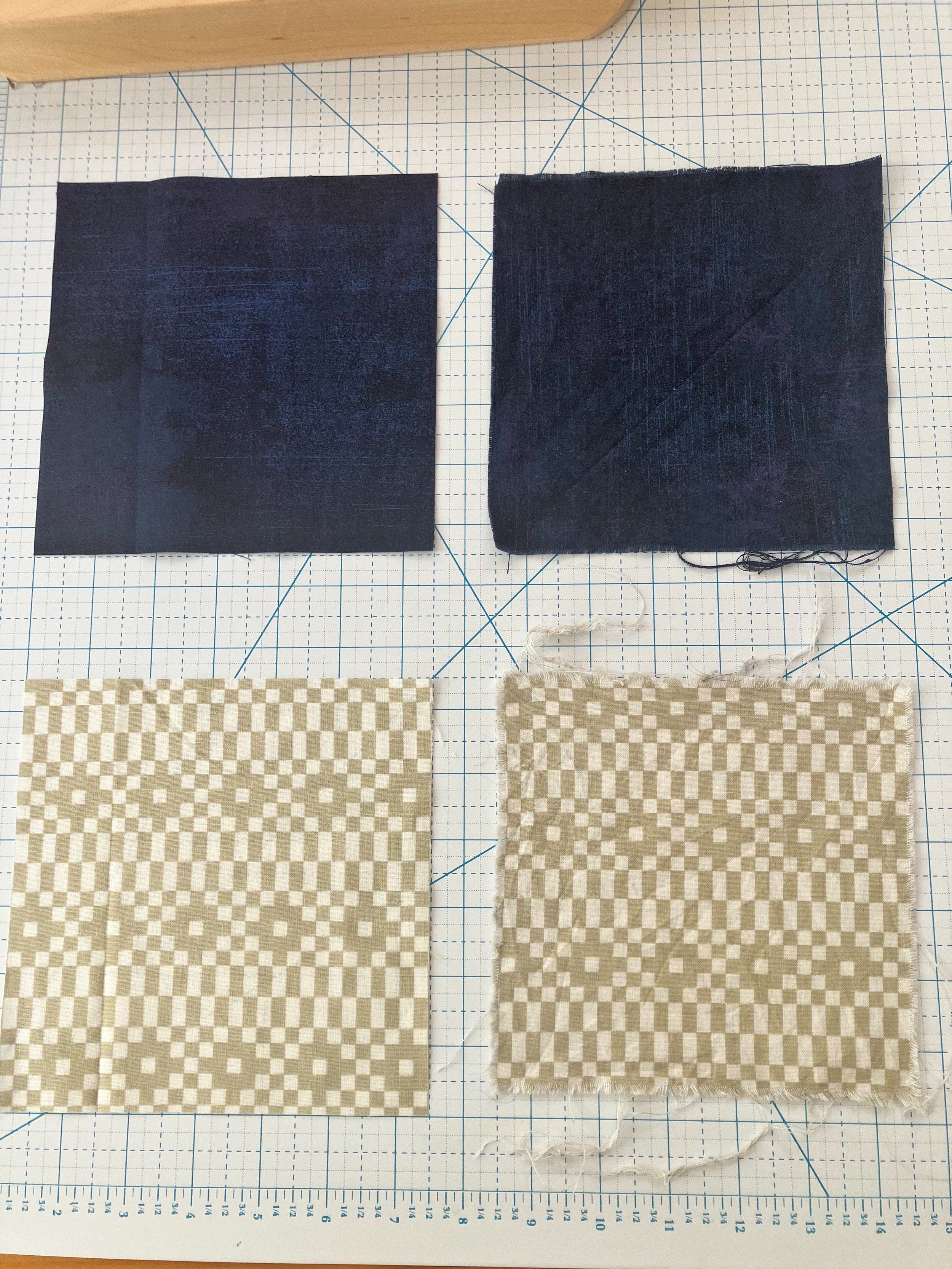
While I was cutting pieces for my pattern, I also cut out some additional 6.5” squares. I cut two in one of the Lofi Linen prints and then also cut two in the Grunge quilting cotton I was using for my background.
One square from each fabric got placed in a safe place. Then the other two got thrown into the same load of quilt laundry. I purposely did NOT stay stitch or zig zag any of the edges on the cut squares. I do this quite often when I get a linen blend I haven’t used in the studio before. I wanted to see the absolute worst-case scenario for shrinking and unraveling in the fabric.
I’m pleasantly surprised at how well the Lofi Linen held up in the wash. I’ve had some linen blend fabrics unravel by almost 2 inches when put through the same treatment. The squares are smaller but not severely and you can even see that my Grunge square has a tangle of threads on its lower edge as well. All fabric can come apart in the wash if the edges aren’t secured.
I lost about 1/2” on the Lofi Linen, but again that was in a completely raw edge piece. Seeing that I didn’t have an absolute insane amount of shrink meant I was comfortable mixing the Lofi Linen with standard quilting cotton as a background (without pre-washing either fabric).
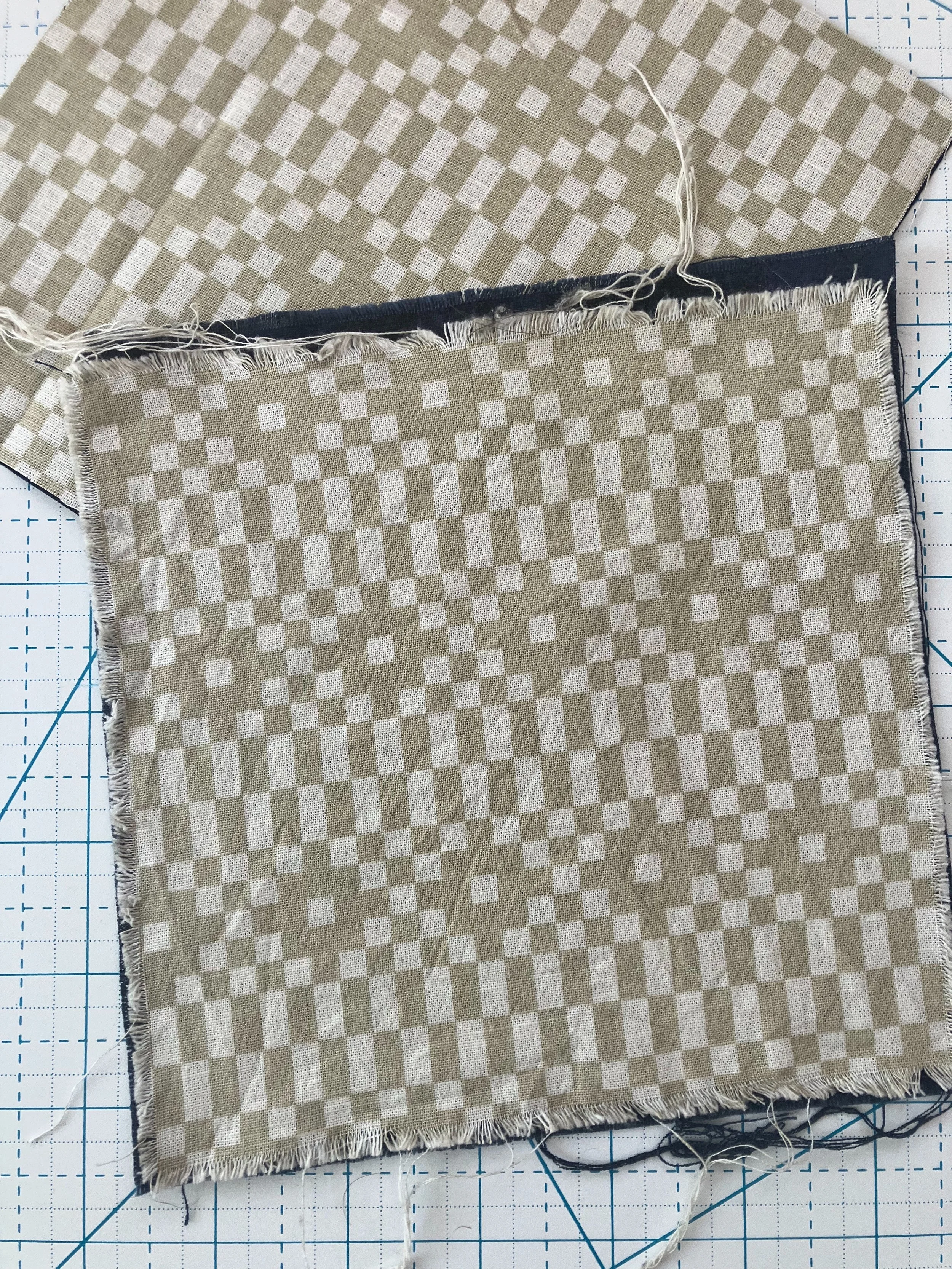
Here you can see the squares stacked on top of each other to show how much unraveled. There’s a very similar amount on the bottom of both squares. The top of the linen square is frayed more severely, but this is mild when compared to other linen blends I’ve worked with in the past.
Sewing with Lofi Linens
For my first pattern, I decided to work with Foundation Paper Piecing. FPP is a great choice when working with a linen blend because you’re already setting a shorter stitch length (I stitch my FPP at 1.8).
I found absolutely no differences when piecing my blocks.
Lofi Linen feels incredible. There’s a slight crispness to the fabric and a bit of texture that is especially easy to feel when pairing it with quilting cotton in a block.
I did initially run into some rippling along my seam when I pieced the first couple of blocks.
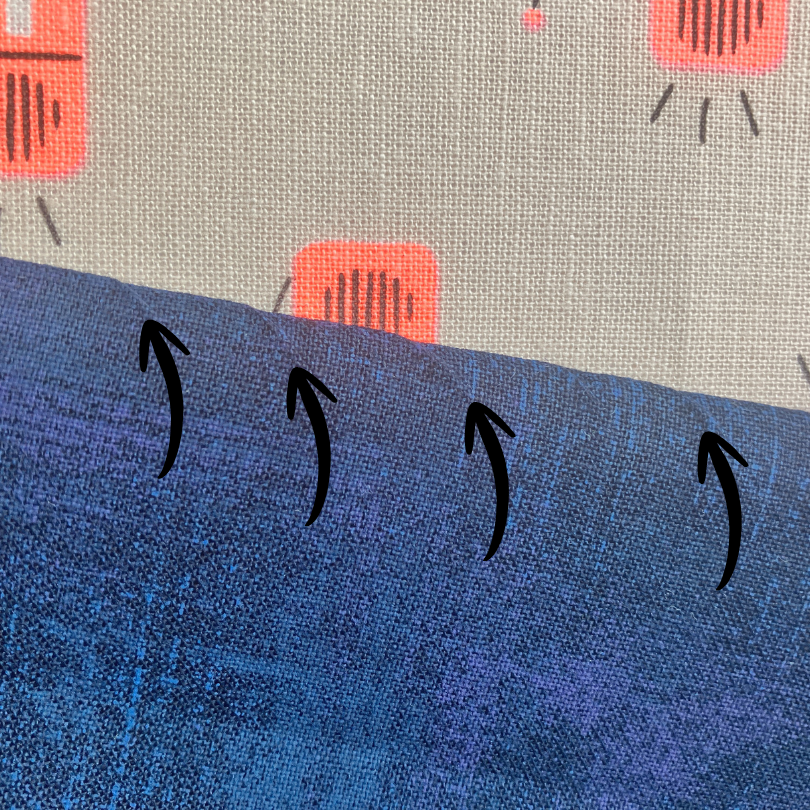
Arrows pointing to the ripples showing in my background fabric.
This could have been caused by a LOT of things, honestly. My FPP blocks have a strong diagonal which is going to create a bias edge. My background sections were oversized and that could leave some fullness in my seam.
Typically, you’d want to not shift and pull at your fabric when pressing a seam. I did have a moment where I wondered if the difference in the two fabric textures was creating a bit of grip. So I tried tugging my background fabric just the slightest bit when I was pressing the second seam open.
Perfectly flat seam.
Again, this is probably more anecdotal than technical. I figured it was worth mentioning though, just in case it was the two fabrics not playing well with each other. I did finish the rest of my quilt blocks by holding the edge of my background fabric taut and then pressing my seams into place. I didn’t run into any further issues with rippling.
Final Thoughts
I am incredibly happy with Lofi Linens. After working with some early precuts, I’ve already put in an order for yardage to stash in my studio.
I think this blend is perfect for anyone who hasn’t sewn with a linen blend before. It’s very forgiving and in my personal experience didn’t include any of the adjustments that I would make when working with a heavier linen base.
TLDR:
I would still use a shorter stitch length. Nothing extreme, but dropping the length down to 1.8 can help to keep everything secure.
Drop your iron temp down to Medium.
Do NOT put it in the dryer.
Try it out! This blend is one of the most forgiving linen/cotton blends I’ve ever used (and there have been a ton).
Care to see me review any other linen fabrics for quilting?
Drop me a comment on Instagram! @textileoutpost