
Let’s Talk Linen!
Would you be surprised if I told you that my favorite fabric substrate to use in quilting is not quilting cotton?
It’s linen!
I’ve been a long-time fan of linen, but it’s availability (in anything other than a solid) hasn’t been the best. I have cabinet of scraps I’ve collected from overseas shops and friends/students over the years; but not the substantial stash that I wish I had to design large projects.
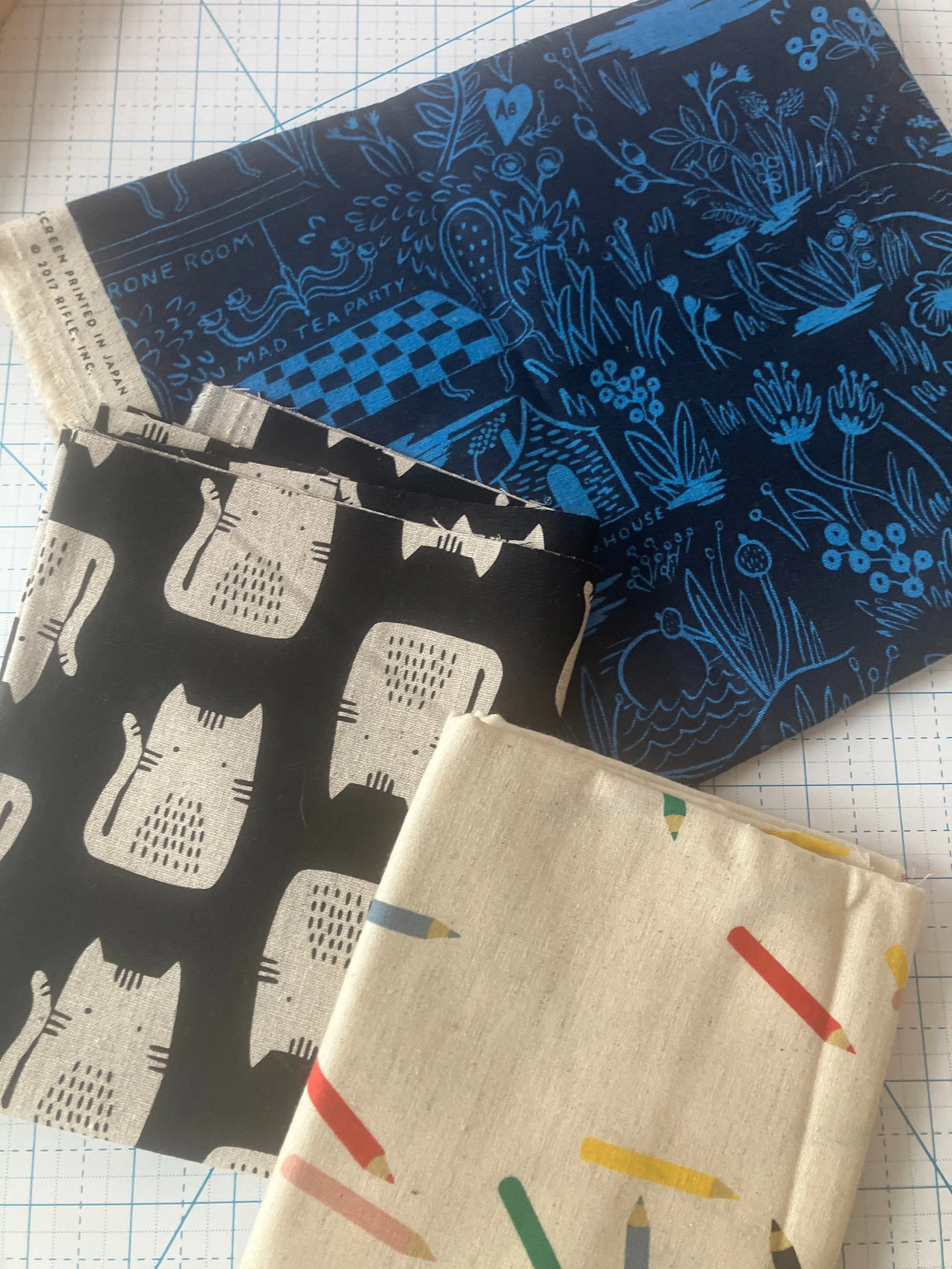
A couple of pieces from my stash.
What is Linen?
Linen is a stronger textile than cotton. It is a bast fiber which means it comes from the inner stalk of a flax plant. These fibers are more absorbent and breathable than cotton because of their tightly packed cell structure. Quality linen is made from the long-staple flax fibers (modern manufacturing has developed coarser chopped-fiber linen as well as pre-softened linens that lose some of their natural qualities). Linen can wrinkle or crease quite easily and can feel stiff when working with it (which often scares some quilters off), but it relaxes and softens over use into an incredible texture. This softening happens when the pectin that binds the fibers breaks down. This process happens with plain water, so there is no need to wash with special soaps or softeners.
Linen is much more labor intensive to harvest than cotton. The longest flax fibers are produced if the plant is harvested by hand. Some believe this is off-set by how eco-friendly and sustainable flax is to grow. Flax requires very little watering, the entire plant is used, and is a strong CO2 capturing plant.
Linen is also quick-drying, naturally moth resistant and anti-bacterial.
My Linen Fabric Has Bumps, Is It Defective?
Nope! Those bumps are called slubs. They are a natural occurrence in linen yarn.
Linen and Quilting
All of the above information refers to 100% linen fabric. You can absolutely use 100% linen in quilting but there are some things to consider:
Linen is heavier than cotton. I tend to avoid mixing linen with very lightweight substrates (such as voile, double gauze or lawn). The difference in weight between the two fabric types will pull at the seams causing them to be more likely to break.
Starch is your friend for 100% linen. Linen has a looser weave and loves to shift and move.
Personal note: I am pretty much starch free in my studio (for various reasons I can discuss in another post) but I do have one bottle stashed away if I decide to work with 100% linen.
Either adjust or secure the seams. If working with 100% linen, shifting the seam allowance to 1/2” can increase the durability. Since I tend to mix linen with cotton, I will leave my seams at 1/4” but then go back and add an additional seam line OR a zigzag to the seam. None of these stitches should cross your original 1/4” seam and this step is done before pressing the block open.
The seam discussion naturally leads to pressing. I never press linen seams open, especially since I’m mixing with cotton. I also typically avoid any other pressing rules (about pressing to the darker color, spinning seams, etc.) and instead always press the linen fabric into the cotton.
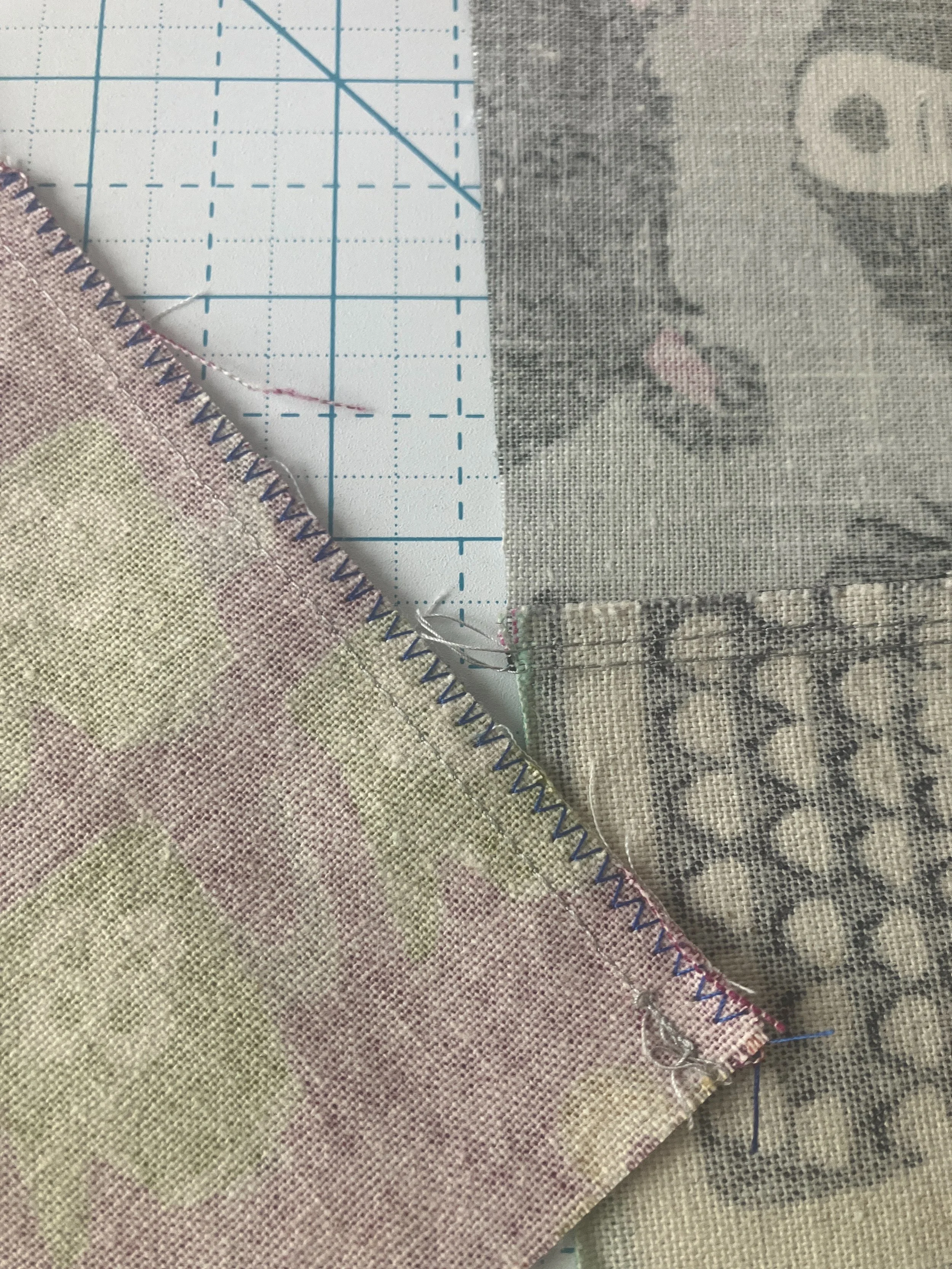
An example of the two types of seam securing: zigzag or a double line. I mainly use a straight stitch machine to work which is why I use a double line (because there is no zigzag setting on my main machine).
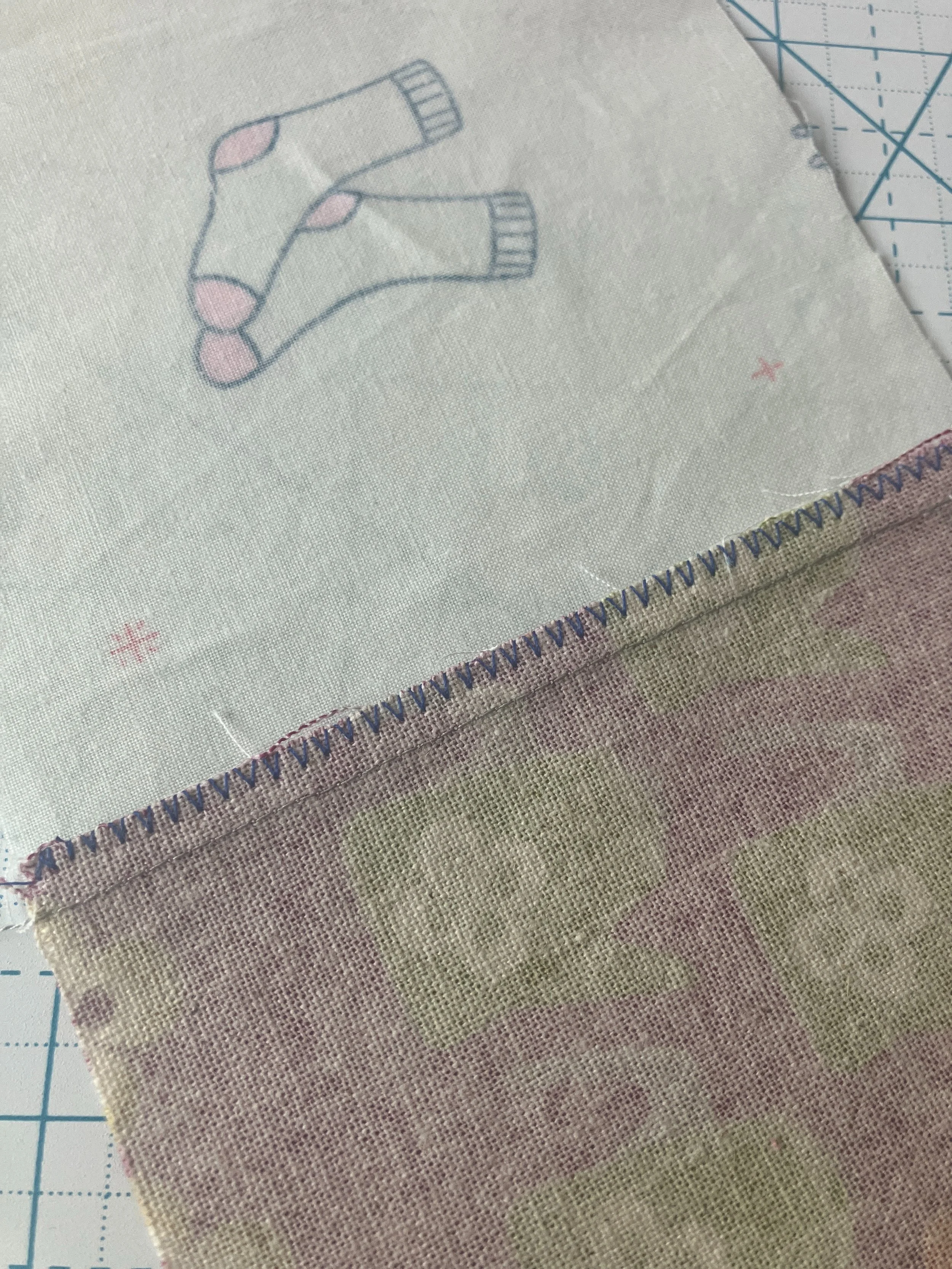
The white fabric above is quilting cotton while the dark is a linen-blend canvas. This shows how I will press towards the quilting cotton square (even though it is white and this ignores the typical “press towards the darker fabric” rule.
Some Linen Quirks
It is important to remember that linen has low-elasticity which means it doesn’t bounce back into shape well. This just means that if you hard press a fold into the linen, that line probably won’t go away. I love the texture and natural wrinkling of linen so this doesn’t bother me when working with linen but is something I like to point out to any students using it for the first time.
Current Linens Marketed to Quilters
There are linens already available! Essex Linen from Robert Kaufman is the most recognizable. It’s important to note here that most of Essex you’ll find in quilt shops is a linen blend (55% linen and 45% cotton). This means it is already going to be easier to incorporate into your projects. Linen-blends are lighter weight which means a lot of the above concerns about stress on the seams are partially alleviated.
Do you have any of the Ruby Star Society canvas prints in your stash? You’ve got some linen! These are typically a 70% cotton and 30% linen blend.
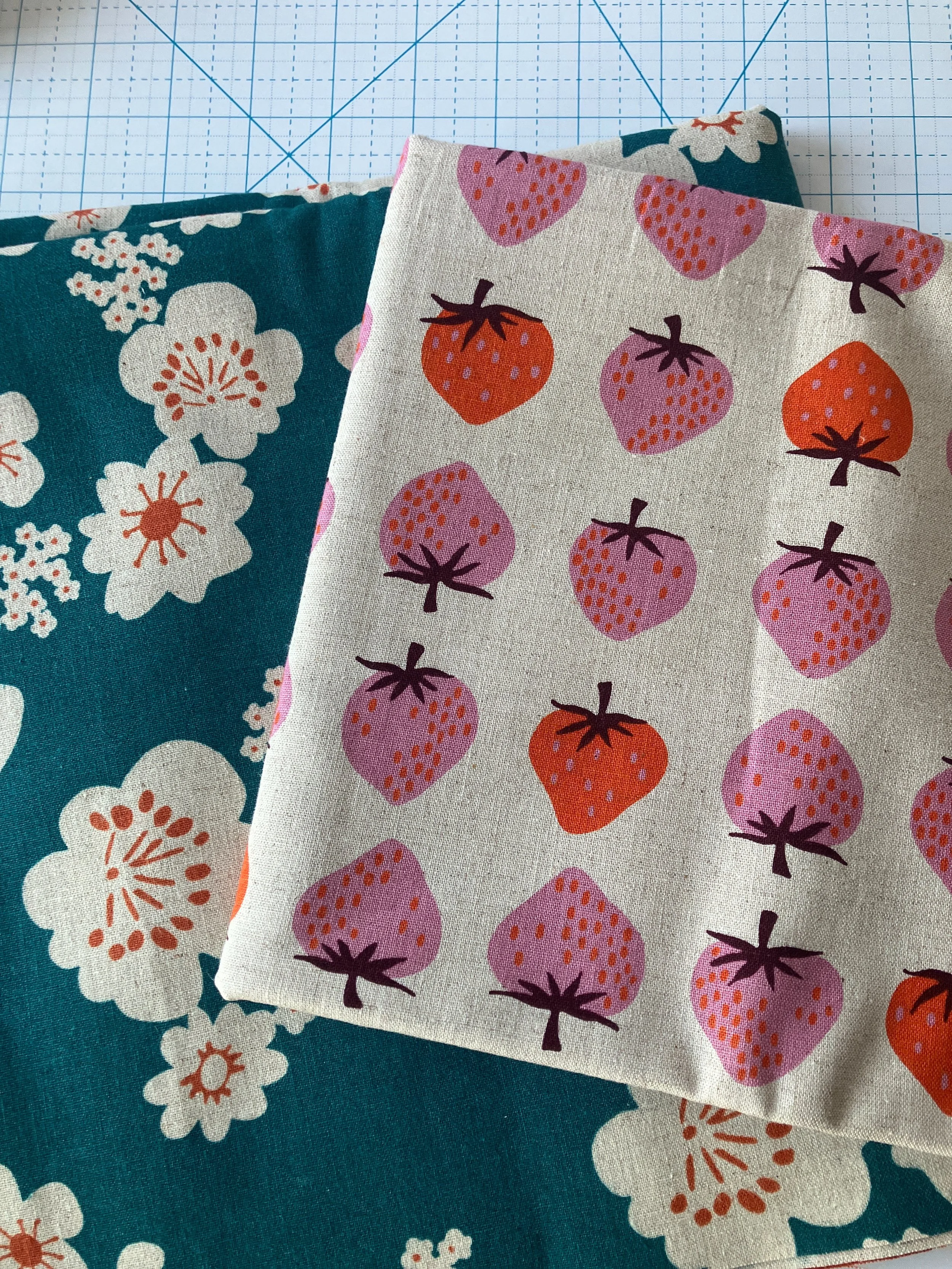
These Ruby Star Society canvas prints are recent additions to my linen stash.
An upcoming “linen substrate” was announced with the most recent catalog from Ruby Star Society. Lofi Linens from Rashida Coleman-Hale is listed at 85% cotton and 15% linen which is different from any of the current linens I’ve been able to gather in my stash. I’m incredibly excited to see how this one feels and what it is like to work with, especially because there’s finally an entire fabric line being printed on linen. As a pattern designer, this is a dream because I won’t have to consider how the different linen-blend bases are going to play against each other. I will, of course, eventually experiment with mixing Lofi with Essex or other scraps; but it is wonderful to know that I can design an entire pattern in Lofi and know that all the fabrics will play well with each other because they’re all the same base.
That….was a lot. Do you have just one thing you can tell me about working with linen?
Quilt the heck out of it.
Seriously.
While I wouldn’t completely recommend skipping every other tip and trick about linen I’ve listed above, you could immediately start incorporating it into your projects to learn what it’s like. Dense quilting is the BEST tip I could ever give you.
You’re going to sacrifice some of the natural relaxing and softening over time qualities, but by using a denser quilting you’re keeping all those fibers from stretching (and possibly breaking).
I hope this article helps to explain some quirks to working with linen. And I hope that you’ll give it a try in your own work! I don’t think there is any “wrong way” to approach using different fabric substrates in quilting. These methods above work for me in my own studio. Something different may work for you. So give it a try!